
/
/
Getting Your Dive Centre Team Ready Before High Season
Dive Centre Operations
Getting Your Dive Centre Team Ready Before High Season
5 Mar 2025 · ⏱ 4 min read
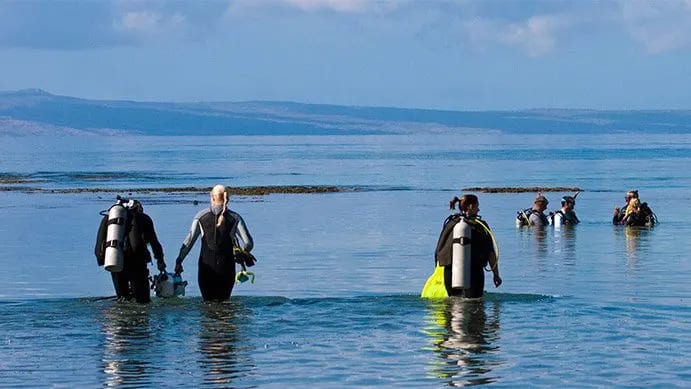
Every dive centre operator knows the feeling: April arrives, bookings start climbing, and suddenly the gap between "we'll sort it out before summer" and summer itself has closed to almost nothing. The centres that run smoothly through July and August aren't the ones with the most staff, they're the ones that did their preparation in March while there was still room to fix problems without a fully booked calendar making every fix urgent.
Staffing: count teaching capacity, not headcount
The most common pre-season mistake is counting instructors instead of counting teaching capacity. Two instructors who can only run Open Water courses give you less flexibility than one instructor who also holds Deep Diver, Nitrox, and Night Diver ratings, because specialty demand tends to spike unpredictably once summer guests arrive and start asking what else is available. If your roster is thin on specialty coverage, late winter is the right time to get instructors through additional specialty instructor training, not June.
Build in a standards refresher, even for experienced staff
Standards drift quietly over a slow season. A briefing shortcut that felt harmless in October, when your only students were two relaxed refresher divers, can become a real liability in August with a full boat of first-time Open Water students. A short, honest team session reviewing current PADI standards, incident reporting procedures, and your centre's own risk management protocols before the season starts costs an afternoon and prevents the kind of drift that only gets noticed after something goes wrong.
Audit equipment before demand makes it hard to take gear offline
Servicing regulators and inspecting BCDs in March means a unit found faulty simply goes to the workshop. Finding the same fault in July means either pulling a unit from active rotation during your busiest week or, worse, not finding it until a student reports a problem mid-course. Build your equipment audit around worst-case timing, not convenient timing.
Think about your EFR and emergency coverage specifically
Every operating day should have someone on site current in emergency response, and ideally more than one person, since the whole point of redundancy is that it still works when your most experienced staff member happens to be out on a boat. If your centre's EFR Instructor coverage is thin, or if it's concentrated in one or two people who are also your busiest teaching staff, spring is the time to add depth through EFR Instructor training rather than discovering the gap during an actual incident.
Plan instructor development, not just instructor scheduling
It's tempting to treat pre-season planning purely as a logistics exercise: who's working which days, who's covering which boat. But centres that invest in their team's development, whether that's supporting staff through the IDC Staff Instructor pathway or sending an instructor for further continuing education, tend to retain better staff and deliver a noticeably more consistent guest experience across a long season.
A simple pre-season checklist
- Map specialty teaching capacity against last year's actual specialty bookings, not assumptions.
- Run a standards and risk-management refresher with the full team before the first busy weekend.
- Service and inspect equipment early enough that faults don't force units offline during peak weeks.
- Confirm EFR and emergency-response coverage across every operating day, not just most of them.
If you're planning team development for the season ahead, get in touch through our contact page to talk through scheduling instructor and staff training around your centre's calendar.
Ready To Take The Next Step?
Explore the IDC and Specialty Instructor courses, meet the team, and start your instructor journey with IDC Sardegna.
More From IDC Sardegna
 Career DevelopmentBuilding a PADI Professional Portfolio That Gets You HiredWhat dive centres actually look for beyond a certification card, and how to build a professional portfolio that makes hiring you an easy decision.5 Aug 2026 · 4 min read
 Specialty TrainingTeaching the Underwater Naturalist Specialty with PurposeHow to move Underwater Naturalist beyond a fish-identification checklist into a course that genuinely changes how students dive and observe.5 Jul 2026 · 4 min read
 Professional DevelopmentThe Mermaid Instructor Course: Widening Your Teaching RangeHow the Mermaid Instructor pathway broadens an instructor's skill set and business, and why it draws on real diving competence, not novelty.5 Jun 2026 · 4 min read
 Chat with us