
/
/
Diversifying Dive Centre Income Through the Off-Season
Dive Centre Operations
Diversifying Dive Centre Income Through the Off-Season
5 Dec 2025 · ⏱ 4 min read
For a lot of Mediterranean dive centres, winter means one of two things: a much-reduced skeleton operation, or an outright seasonal closure. Both are defensible business decisions, but neither is the only option, and centres that treat the off-season purely as a cost to survive rather than a period with its own revenue potential are leaving a genuinely useful part of the year unused.
Professional-level training fills a real gap
Recreational diver demand drops sharply in winter, but demand for professional-level training doesn't follow the same seasonal pattern nearly as closely. Working Divemasters and instructors often have more flexibility to travel for training precisely in the off-season, when they're not tied to their own centre's busy summer schedule. Positioning your centre for IDC, IDC Staff Instructor, or specialty instructor training in the quieter months taps a different customer entirely, one whose booking decisions aren't driven by beach weather.
Specialty courses for the divers who never left
Every centre has a small population of committed local or long-stay divers who keep diving through winter regardless of temperature. These divers are frequently under-served, because centres default to summer-focused Open Water throughput and don't build a specific winter offering around them. A structured winter specialty calendar, Dry Suit Diver, Deep Diver, or Night Diver, run consistently rather than opportunistically, converts a handful of loyal customers into a genuine, if modest, revenue line.
Staff development as an investment, not a cost centre
Winter is also the obvious window to invest in your own team without the opportunity cost of pulling instructors off paying summer bookings. Sending staff through additional specialty ratings, or supporting an instructor toward further continuing education, costs money in the short term and pays back directly the following season through a broader, more capable teaching roster able to say yes to more of what summer guests ask for.
Equipment servicing and facility work, done properly instead of rushed
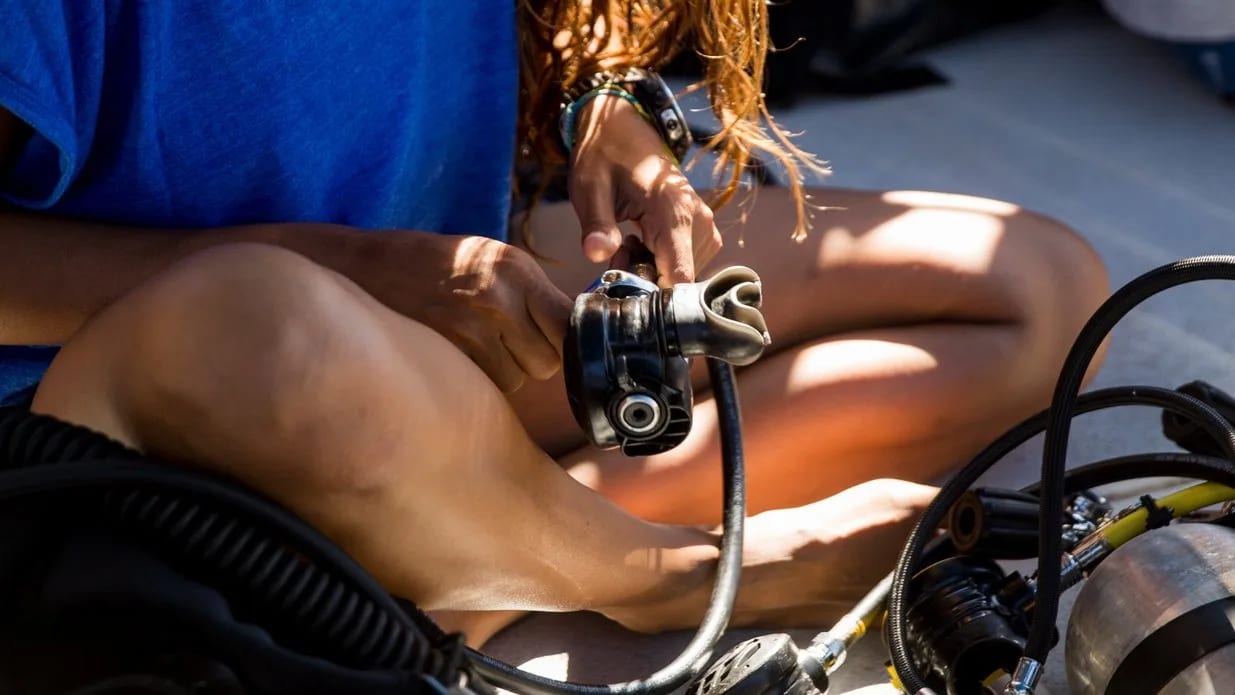
It's not glamorous, but winter is when equipment servicing, facility maintenance, and boat work can be done properly and on schedule rather than squeezed into overnight windows during a packed summer calendar. Centres that treat this as deliberate off-season planning rather than reactive scrambling tend to start the following season with noticeably fewer avoidable equipment problems.
Building relationships that pay off in summer
Winter's slower pace also creates real space for the relationship-building that's nearly impossible during a packed July: developing partnerships with other centres and tourism operators, and refining the systems and standards that will get stress-tested the moment summer bookings arrive. None of this shows up directly on a winter balance sheet, but its effect on the following season's operations is real and measurable.
The mindset shift
The centres that handle winter best aren't necessarily doing more activity than the ones that simply close, they're doing more deliberate activity: training, maintenance, and relationship-building specifically chosen because it's hard to fit in during summer, rather than a scaled-down version of the summer business trying to run on a fraction of the demand.
If your centre wants a winter training program built around your team's specific gaps rather than a generic package, our tailor-made instructor training can be scheduled around your off-season calendar. Get in touch through our contact page to talk it through.
Ready To Take The Next Step?
Explore the IDC and Specialty Instructor courses, meet the team, and start your instructor journey with IDC Sardegna.
More From IDC Sardegna
 Career DevelopmentBuilding a PADI Professional Portfolio That Gets You HiredWhat dive centres actually look for beyond a certification card, and how to build a professional portfolio that makes hiring you an easy decision.5 Aug 2026 · 4 min read
 Specialty TrainingTeaching the Underwater Naturalist Specialty with PurposeHow to move Underwater Naturalist beyond a fish-identification checklist into a course that genuinely changes how students dive and observe.5 Jul 2026 · 4 min read
 Professional DevelopmentThe Mermaid Instructor Course: Widening Your Teaching RangeHow the Mermaid Instructor pathway broadens an instructor's skill set and business, and why it draws on real diving competence, not novelty.5 Jun 2026 · 4 min read
 Chat with us