
/
/
Risk Management for Deep and Advanced Specialty Dives
Safety
Risk Management for Deep and Advanced Specialty Dives
5 May 2025 · ⏱ 5 min read
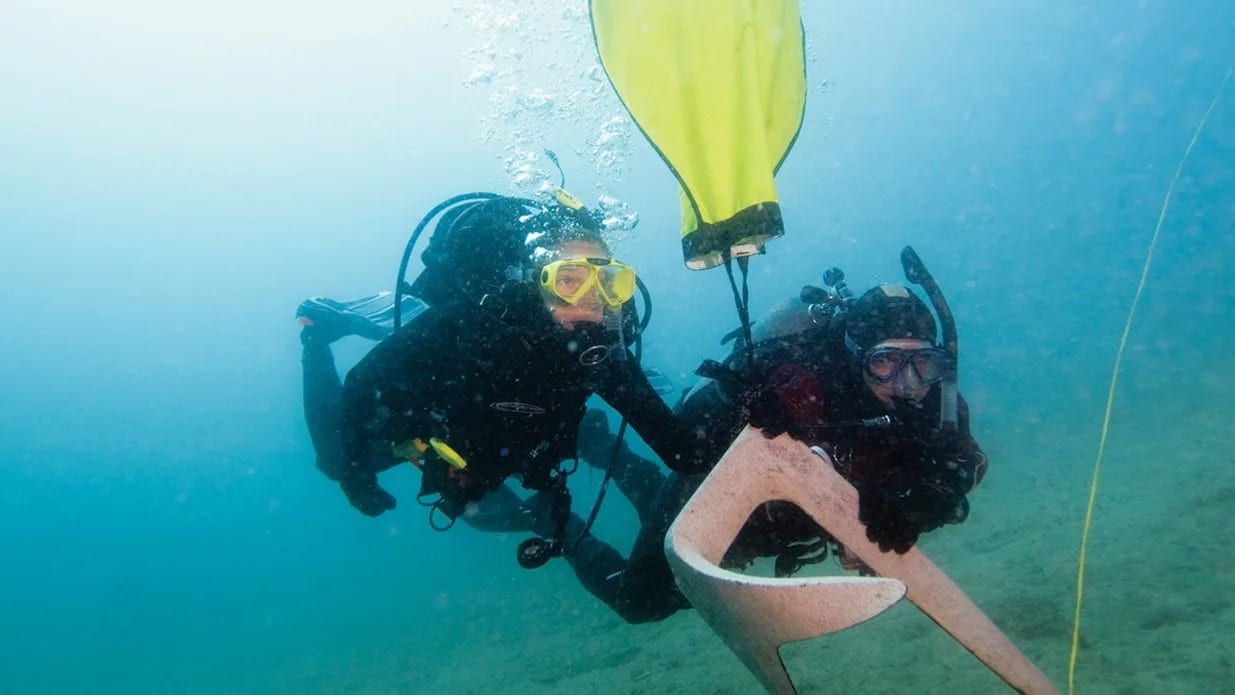
Advanced specialty courses carry a different risk profile than entry-level training, and not just because of depth or overhead environments. Students arrive with more confidence than an Open Water diver, which is exactly what makes them harder to manage: a nervous beginner tells you when something feels wrong, while a confident advanced student often pushes through discomfort rather than admit it. Good risk management in specialty teaching starts with planning for that difference, not just planning for the dive profile.
Build abort criteria before the briefing, not during the dive
Every specialty dive should have clear, specific abort criteria decided in advance: a maximum acceptable air consumption at a checkpoint, a visibility threshold below which the dive changes shape, a behavioural sign, hesitation, erratic finning, delayed responses to signals, that triggers an immediate check-in. Deciding these thresholds in the moment, under mild time pressure with a boat waiting, produces worse decisions than deciding them calmly beforehand and simply executing the plan when a threshold is crossed.
Brief for the failure mode, not just the success mode
Most briefings describe what the dive should look like when everything goes right. A stronger briefing spends real time on what specifically the student should do if it doesn't: who signals whom, what the ascent procedure looks like from this particular site and depth, and what "we are ending this dive now" actually looks like in hand signals so there's no ambiguity in the moment. Students who have rehearsed the failure mode verbally are dramatically calmer if they ever have to execute it for real.
Watch ratios honestly, especially at depth
PADI ratios for specialty courses exist as a ceiling, not a target. An instructor running a Deep Diver or Wreck Diver course with a full group at the maximum permitted ratio, in conditions that are anything less than ideal, is accepting a meaningfully thinner safety margin than the same course run with one fewer student. Experienced instructors learn to treat ratio as one input into a broader judgement call about that specific day's conditions, that specific group's competence, and their own capacity to genuinely watch everyone at once.
Equipment checks scale with the specialty
A pre-dive check appropriate for an Open Water refresher is not sufficient for a specialty dive where equipment failure has less margin for improvised recovery. Instructors teaching Dry Suit Diver, where an inflator or seal failure changes the entire dive, or Deep Diver, where a free-flow at depth burns gas far faster than the same failure in shallow water, should be running a visibly more thorough check than their standard routine, and should be teaching students why the check is different, not just that it is.
Debrief every dive as if something could have gone wrong, even when nothing did
The instructors with the strongest long-term safety records tend to run honest debriefs after uneventful dives, not just after incidents. "That went fine, but here's what I was watching for and why" builds a student's own risk awareness in a way that only ever debriefing actual problems never does. It also gives you, as the instructor, a habit of continuously auditing your own judgement rather than only reflecting on it after something forces the issue.
Where this connects to your own training
This kind of judgement is exactly what a strong IDC and ongoing professional development are meant to build, and it's a core focus of continuing education through the Advanced Training Academy for instructors who want to sharpen these habits after certification rather than assuming they're fixed once and done.
If you'd like to talk through risk management specifically for the specialties you teach, reach out through our contact page.
Ready To Take The Next Step?
Explore the IDC and Specialty Instructor courses, meet the team, and start your instructor journey with IDC Sardegna.
More From IDC Sardegna
 Career DevelopmentBuilding a PADI Professional Portfolio That Gets You HiredWhat dive centres actually look for beyond a certification card, and how to build a professional portfolio that makes hiring you an easy decision.5 Aug 2026 · 4 min read
 Specialty TrainingTeaching the Underwater Naturalist Specialty with PurposeHow to move Underwater Naturalist beyond a fish-identification checklist into a course that genuinely changes how students dive and observe.5 Jul 2026 · 4 min read
 Professional DevelopmentThe Mermaid Instructor Course: Widening Your Teaching RangeHow the Mermaid Instructor pathway broadens an instructor's skill set and business, and why it draws on real diving competence, not novelty.5 Jun 2026 · 4 min read
 Chat with us