
/
/
Teaching the PADI Night Diver Specialty with Confidence
Specialty Training
Teaching the PADI Night Diver Specialty with Confidence
5 Aug 2025 · ⏱ 4 min read
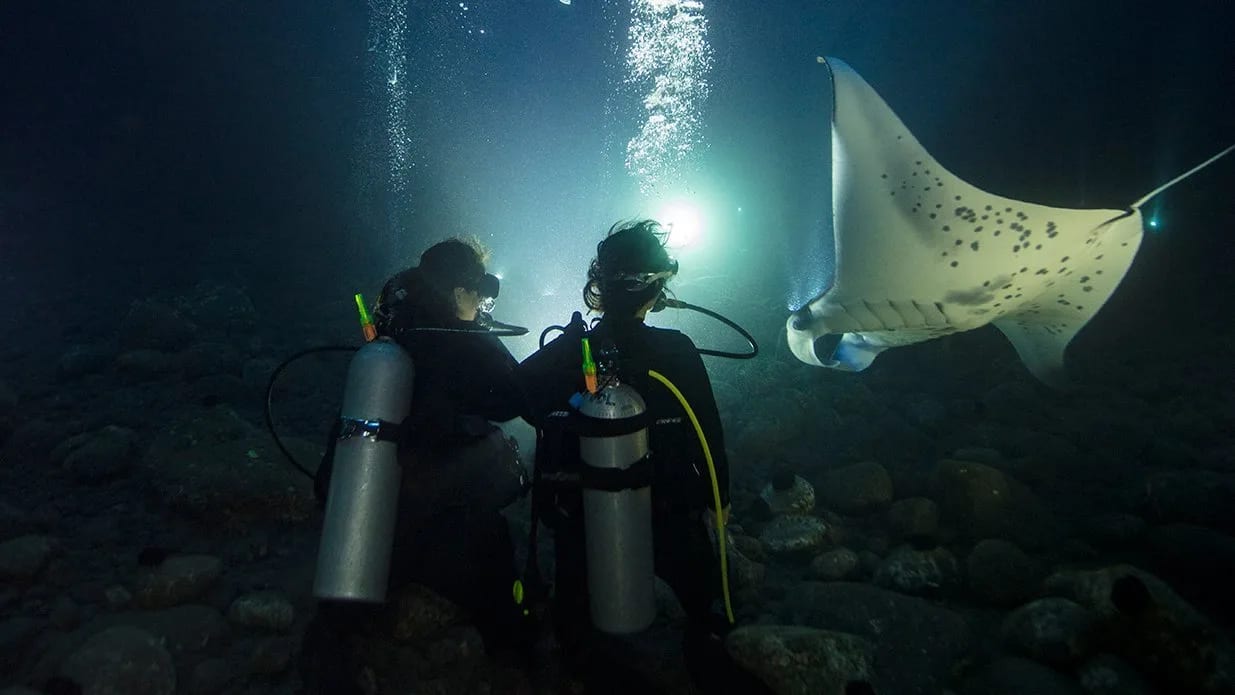
Night Diver is unusual among PADI specialties because the primary variable being taught isn't really a skill at all, it's a psychological state. Take away visible light and most of a diver's normal reference points disappear: the horizon, the surface glow, the ability to glance at a buddy's face for reassurance. Students who are entirely comfortable in daylight sometimes discover a genuine, unexpected edge of anxiety the moment the sun goes down, and teaching this specialty well means planning for that reality rather than being surprised by it.
Manage the first descent deliberately
The transition from surface to depth is where most first-time night divers experience their sharpest spike in anxiety, particularly in the last few metres before torch beams start picking out a stable, familiar bottom. Strong instructors slow this specific moment down more than any other part of the dive, staying close, maintaining frequent light and hand-signal contact, and resisting the urge to descend at a normal pace just because the group is comfortable divers on paper. The first few minutes set the emotional tone for the rest of the dive.
Teach light discipline as a communication skill
New night divers instinctively want to point their torch at whatever they're looking at, including, repeatedly, directly into a buddy's mask. Teaching proper light discipline, angling beams downward when not actively signalling, using light circles and specific signal patterns instead of words, and checking in with a buddy's torch beam rather than staring into it, is really teaching an entirely new communication language layered on top of the hand signals students already know. It deserves dedicated classroom time before ever entering the water, not a rushed mention during the surface briefing.
Buddy contact matters more here than almost anywhere else
Losing visual contact with a buddy for even a few seconds feels dramatically more serious at night than in daylight, even when the actual risk is comparable. Instructors should teach and enforce a genuinely tighter buddy protocol for night diving than for daytime specialties, including specific reunion procedures if contact is lost, practised on the surface before the dive rather than explained only in theory.
Read anxiety honestly, and don't push through it
Some students discover during their first confined or shallow night dive that it's simply not for them, at least not yet, and that's a legitimate outcome, not a failure of the course. Instructors who push a visibly anxious student through a full open water night dive because the schedule says so are prioritising the course timeline over the student's actual readiness. A short, honest conversation and, where appropriate, an extra supervised session before progressing serves the student far better than forcing completion.
Where it fits alongside other specialties
Night Diver pairs naturally with Underwater Navigator, since navigation without strong visual references is a meaningfully harder skill worth building deliberately, and with Drift Diver for students diving sites where current and darkness combine. Instructors building a broader specialty teaching portfolio often find Night Diver becomes one of their most requested courses once local divers realise it's offered, simply because so few divers get proper night training early in their diving.
If you're considering adding Night Diver Instructor to your own card, get in touch through our contact page to discuss scheduling.
Ready To Take The Next Step?
Explore the IDC and Specialty Instructor courses, meet the team, and start your instructor journey with IDC Sardegna.
More From IDC Sardegna
 Career DevelopmentBuilding a PADI Professional Portfolio That Gets You HiredWhat dive centres actually look for beyond a certification card, and how to build a professional portfolio that makes hiring you an easy decision.5 Aug 2026 · 4 min read
 Specialty TrainingTeaching the Underwater Naturalist Specialty with PurposeHow to move Underwater Naturalist beyond a fish-identification checklist into a course that genuinely changes how students dive and observe.5 Jul 2026 · 4 min read
 Professional DevelopmentThe Mermaid Instructor Course: Widening Your Teaching RangeHow the Mermaid Instructor pathway broadens an instructor's skill set and business, and why it draws on real diving competence, not novelty.5 Jun 2026 · 4 min read
 Chat with us