
/
/
Why Every PADI Professional Should Hold an EFR Rating
Professional Development
Why Every PADI Professional Should Hold an EFR Rating
5 Apr 2025 · ⏱ 4 min read
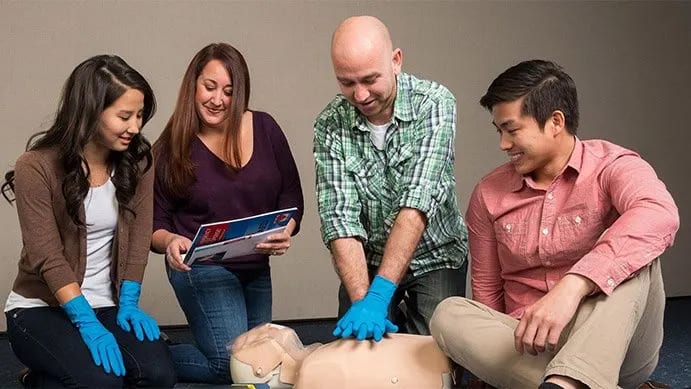
Ask a room of working instructors which specialty rating changed how they taught, and Deep Diver or Wreck Diver usually come up. Ask which rating changed how they thought about their own responsibility to students, and the answer is almost always Emergency First Response Instructor. It's easy to file EFR Instructor under "useful but optional," a box to tick rather than a genuine investment. That undersells it considerably.
It's the credential that protects everything else you do
Every course you teach, from a first Discover Scuba Diving experience to an advanced specialty, carries some level of physical risk, and every one of those courses is safer when the instructor running it can also run a confident, current emergency response if something goes wrong. Holding an EFR Instructor rating means you're not dependent on someone else being present and current to handle a medical situation. You are that person, on every course, every time.
Teaching CPR and first aid is a different skill than performing it
Plenty of instructors are personally confident in an emergency but have never actually taught someone else to be confident in one. EFR Instructor training addresses that gap directly: it's built around scenario-based teaching, honest debriefs, and the same kind of skill-breakdown discipline used in confined water diving instruction, adapted for CPR, AED use, and secondary care. Instructors who go through it well often report that it sharpened their general teaching technique across every other course they run, not just emergency response ones.
It compounds with everything else on your card
An EFR Instructor rating isn't a standalone credential sitting apart from your diving specialties, it strengthens all of them. An instructor teaching Advanced Oxygen Provider or Emergency Oxygen Provider courses benefits directly from the teaching structure EFR Instructor training builds. Deep Diver and Dry Suit instructors, who work with students in conditions where things can go wrong faster and with less margin, carry more genuine authority when their emergency response teaching is current and confident rather than theoretical.
Dive centres notice, and so do students
From an operations standpoint, dive centres actively look for instructors who bring EFR teaching capacity with them, because it reduces the centre's dependency on a small handful of staff for emergency coverage, an issue we've written about from the operations side before. From a student's standpoint, an instructor who can speak with genuine authority about emergency response, because they teach it rather than just holding the certification, tends to be trusted faster and more completely, which matters in every course, not just the ones explicitly about safety.
Making the case for yourself
If you're weighing which rating to add next, the usual calculation is "which specialty will bring in the most bookings." EFR Instructor deserves a different calculation: which rating makes you a genuinely better and more trusted professional across everything you already do. For most working instructors, that answer points firmly toward EFR.
If you'd like to talk through where EFR Instructor fits into your existing teaching plan, our team can walk you through timing and prerequisites.
Ready To Take The Next Step?
Explore the IDC and Specialty Instructor courses, meet the team, and start your instructor journey with IDC Sardegna.
More From IDC Sardegna
 Career DevelopmentBuilding a PADI Professional Portfolio That Gets You HiredWhat dive centres actually look for beyond a certification card, and how to build a professional portfolio that makes hiring you an easy decision.5 Aug 2026 · 4 min read
 Specialty TrainingTeaching the Underwater Naturalist Specialty with PurposeHow to move Underwater Naturalist beyond a fish-identification checklist into a course that genuinely changes how students dive and observe.5 Jul 2026 · 4 min read
 Professional DevelopmentThe Mermaid Instructor Course: Widening Your Teaching RangeHow the Mermaid Instructor pathway broadens an instructor's skill set and business, and why it draws on real diving competence, not novelty.5 Jun 2026 · 4 min read
 Chat with us