
/
/
Teaching the PADI Wreck Diver Specialty the Right Way
Specialty Training
Teaching the PADI Wreck Diver Specialty the Right Way
5 Feb 2025 · ⏱ 4 min read
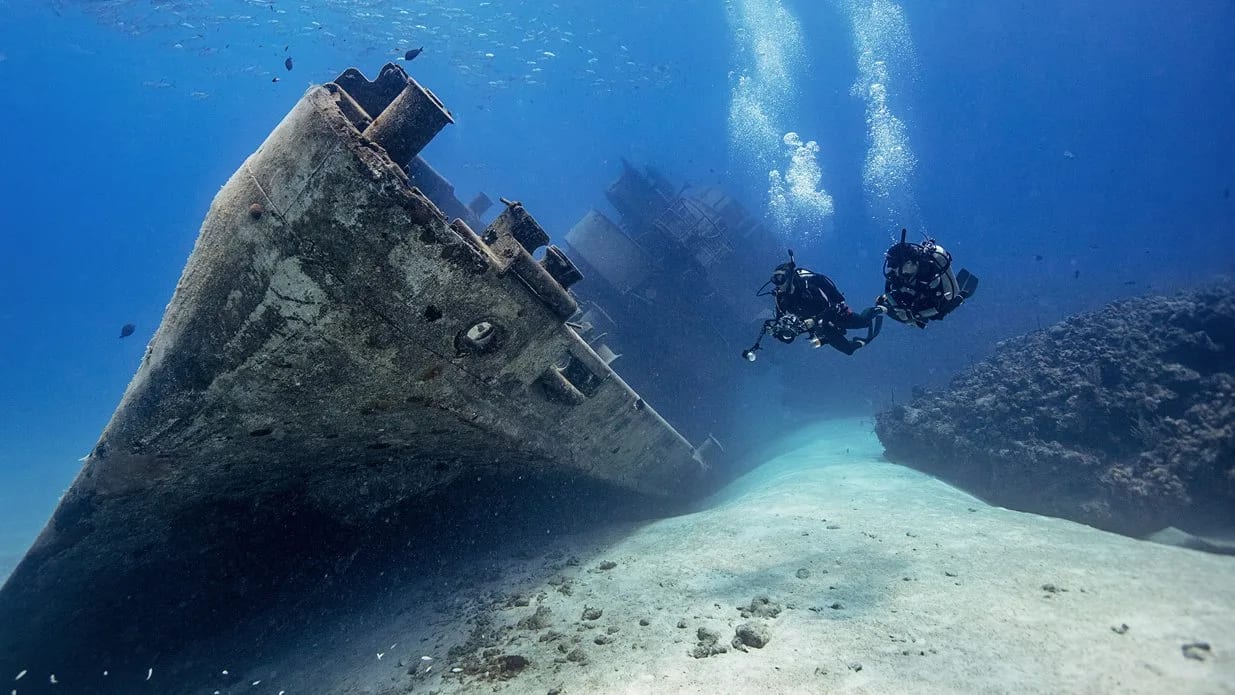
Wreck Diver attracts more romanticism than almost any other specialty. Students sign up imagining themselves finning past a rusted hull with a torch beam cutting through the gloom, and that image isn't wrong exactly, it's just incomplete. The instructor's job is to teach the discipline underneath the romance: line work, buoyancy control near silt-prone surfaces, and the judgement to know when not to go somewhere, which matters far more than the judgement to go somewhere impressive.
Start with restraint, not technique
New Wreck Diver instructors often begin the course by teaching line-laying mechanics or reel handling, which are important but secondary. The first real lesson is teaching students to recognise their own limits: visibility that's dropping, air consumption that's climbing faster than planned, or simply a growing sense of disorientation. A student who internalises "when in doubt, turn around" before ever touching a reel will make better decisions on every dive that follows, including ones you're not there to supervise.
Buoyancy as the actual skill being tested
Nearly every wreck-diving incident that isn't equipment failure traces back to buoyancy, either silt-outs from fin kicks too close to a sedimented deck, or accidental contact with a fragile or sharp structure. Teaching Wreck Diver well means running buoyancy drills specifically in wreck-adjacent conditions, not assuming that a diver who's comfortable in open water will automatically transfer that comfort to a confined, visually cluttered space. Horizontal trim and controlled, minimal fin kicks deserve as much class time as the penetration-limits discussion.
Sardinia's wrecks as a teaching asset
The waters around Sardinia hold a genuinely useful mix of wreck sites for instructor-level training, from accessible, well-preserved hulls suitable for a student's first wreck dive, to more demanding sites reserved for instructors building their own experience. Running Wreck Diver Instructor training here means candidates get to plan and brief around real variation in depth, penetration complexity, and current, rather than repeating the same single wreck across every session.
Non-penetration doesn't mean non-serious
PADI's Wreck Diver course is a non-penetration specialty at the certified-diver level, and some instructors underteach it as a result, treating it as a slightly more scenic Open Water dive. That undersells what students actually need: mapping and orientation skills, an honest conversation about entanglement hazards even outside a wreck's interior, and a clear framework for what "penetration" actually means so graduates don't unknowingly cross a line on a future dive with a different operator.
Pairing it with complementary specialties
Wreck Diver sits naturally alongside Deep Diver, since many of the most interesting wrecks sit below recreational entry-level depths, and alongside Search and Recovery, which shares the same navigation and line-handling foundations. Instructors who teach these specialties as a connected set, rather than as isolated one-off courses, tend to build stronger repeat business from divers who want to keep progressing with someone they already trust.
For instructors looking to add Wreck Diver to their teaching card, our full specialty instructor course listing outlines prerequisites and how it fits alongside other ratings.
Ready To Take The Next Step?
Explore the IDC and Specialty Instructor courses, meet the team, and start your instructor journey with IDC Sardegna.
More From IDC Sardegna
 Career DevelopmentBuilding a PADI Professional Portfolio That Gets You HiredWhat dive centres actually look for beyond a certification card, and how to build a professional portfolio that makes hiring you an easy decision.5 Aug 2026 · 4 min read
 Specialty TrainingTeaching the Underwater Naturalist Specialty with PurposeHow to move Underwater Naturalist beyond a fish-identification checklist into a course that genuinely changes how students dive and observe.5 Jul 2026 · 4 min read
 Professional DevelopmentThe Mermaid Instructor Course: Widening Your Teaching RangeHow the Mermaid Instructor pathway broadens an instructor's skill set and business, and why it draws on real diving competence, not novelty.5 Jun 2026 · 4 min read
 Chat with us